

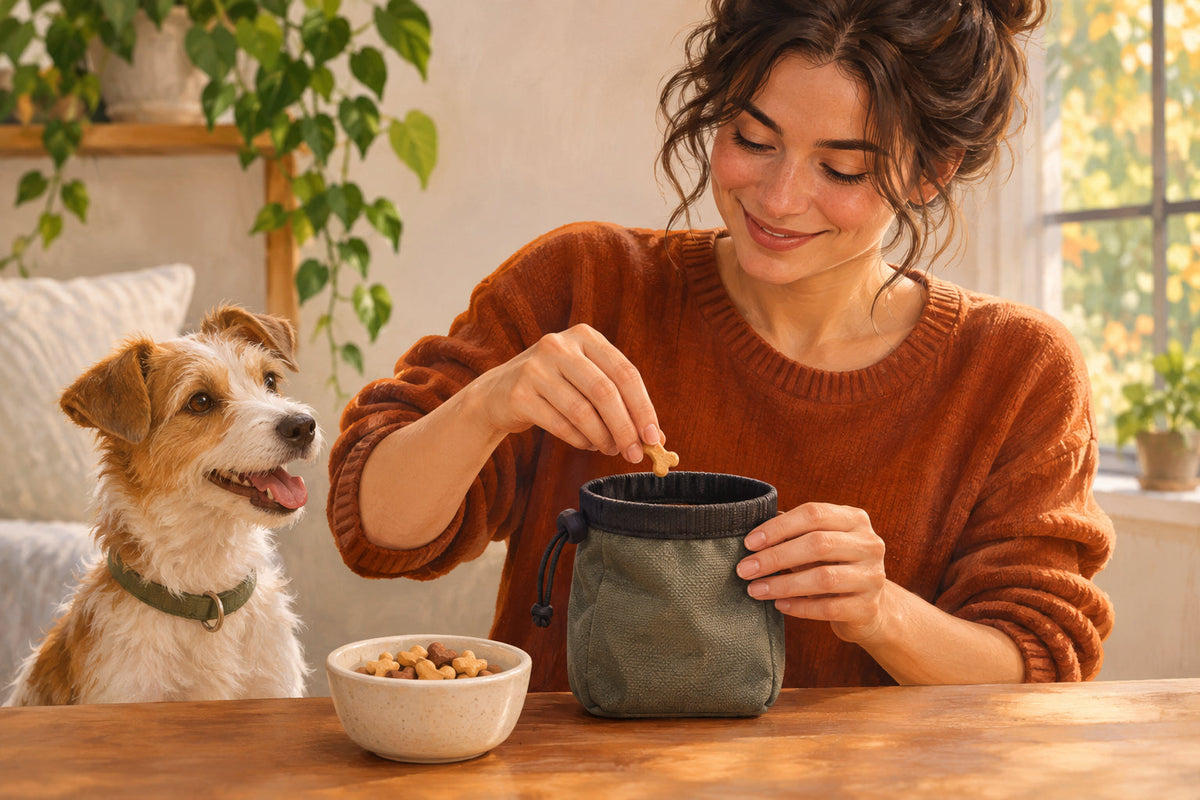
Put a small, preplanned portion of suitable treats in a clean pouch, keep the original package information, and clean the pouch according to its care label. Use food your dog can eat comfortably, and count rewards as part of the day's intake.
What should go in a training pouch?
Choose a reward your dog likes and can handle comfortably. Some dogs will work for part of their regular meal; others prefer a toy or praise. Plan the amount before training rather than filling the pouch without measuring.
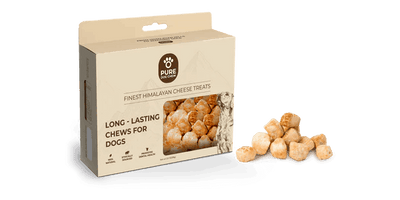
For example, Puffed Himalayan Yak Cheese Dog Treats are crunchy, ready-to-serve rewards for dogs older than five months. They contain dairy. Choose an appropriate portion and piece size, supervise your dog, and provide water. For a milk sensitivity, food trial or prescribed diet, ask your veterinarian before using any new treat.
How much should I pack?
Ask your veterinary team how treats fit your dog's daily food plan; energy needs differ. The WSAVA treat guide explains that treats contribute calories alongside meals. A practical starting step is to set aside the amount agreed with your vet before the session and include all other treats given that day.
How do I keep the pouch clean?
- Empty leftover food and crumbs after use. Follow the treat label for storage; do not assume the pouch keeps food fresh indefinitely.
- Follow the pouch manufacturer's washing instructions. If the pouch is washable and has no other instructions, clean the food-contact surface with warm soapy water, rinse thoroughly and let it dry fully before reuse.
- Keep cleaning chemicals away from food. Replace a pouch that cannot be cleaned or has damaged lining.
- Wash hands with soap and water before and after handling treats. The CDC's pet-food safety guidance covers handwashing and cleaning food-contact supplies.
Should I transfer the whole bag?
For a session, carry only the amount you need. Retain the original package so the ingredient list, feeding instructions, date and lot information remain available. The FDA explains why original packaging and lot details matter. Follow the food's storage instructions and keep it out of pets' reach between sessions.
What if the reward distracts my dog?
Begin in a quiet place and choose a reward your dog can manage comfortably. Reward the behavior you want, then allow time for your dog to finish before asking again. Treats are one option; if food is not appropriate, ask your vet or a qualified reward-based trainer about alternatives. Our hand-target guide offers a simple practice exercise.
General educational information. Illustration generated for this article; it does not show actual product packaging.


