

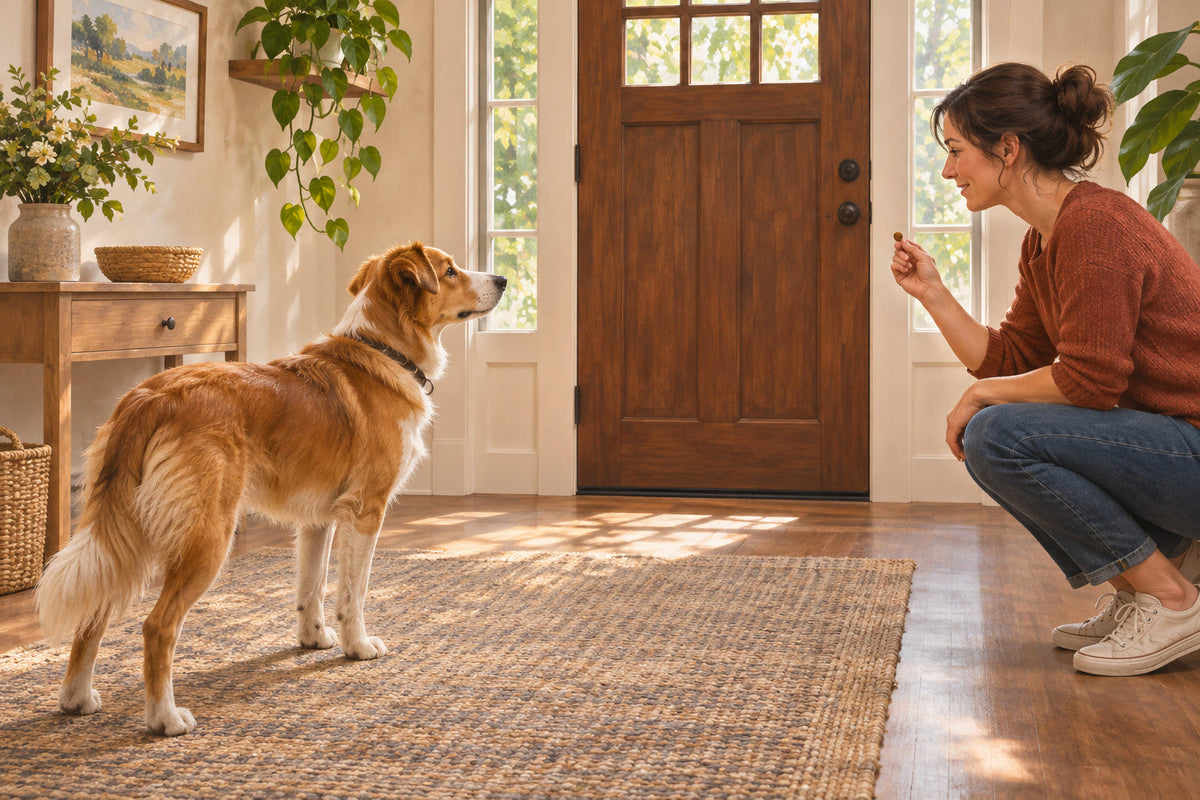
Teach your dog to wait at a doorway by rewarding a brief pause before you open it, then gradually increasing the challenge. Begin at a closed interior door in a quiet area. Use a secure lead or barrier whenever an accidental escape would be unsafe: training is useful, but it is not a substitute for physical precautions.
What you need before you start
Choose a quiet room, an interior door, a marker word such as “yes,” and a reward your dog likes. Have another adult manage children or visitors so no one unexpectedly opens the door. For a dog who is afraid of the doorway or becomes distressed, stop and ask a qualified reward-based trainer or your veterinarian for help.
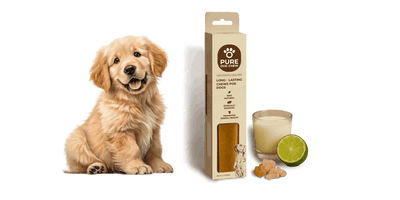
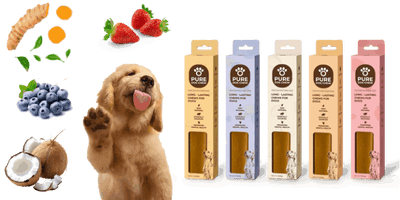
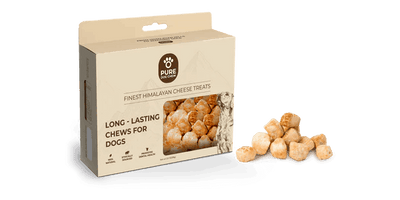
For a food reward, you can consider Puffed Himalayan Yak Cheese Dog Treats: they are crunchy, ready-to-serve dairy treats for dogs older than five months. Offer a portion appropriate for your dog, supervise, and provide water. Count rewards in the daily food allowance. For a milk sensitivity, food trial or prescribed diet, ask your veterinarian before introducing them; your dog's usual food may be a better choice.
How to teach a short wait
- Reward a pause at a closed door. Stand with your dog a comfortable distance away. When your dog pauses without moving toward the door, say “yes” and offer a reward on your side of the doorway. Start with a moment, not a long stay.
- Introduce a small door movement. Once the pause is easy, touch the handle and reward your dog for remaining back. Then open the door only a crack and reward promptly while your dog is still on your side. Keep fingers and paws clear of the door.
- Build slowly. Increase the opening a little at a time. If your dog moves forward, calmly reset with the door closed and make the next attempt easier. Avoid scolding or using the door to frighten the dog.
- Add a cue and release. When the behavior is becoming reliable, say “wait” just before moving the handle. On some repetitions, say a release word such as “okay” and invite your dog through; on others, close the door and reward the pause. Use the same release word consistently.
- Practice in new places carefully. Start again with an easy version at another interior doorway. If practicing at an outside door, use a securely fitted lead and a second barrier where possible. Do not rely on the cue alone to prevent escape.
This approach follows reward-based doorway exercises described by Dogs Trust and the American Kennel Club. Work at your dog's pace and keep sessions short and positive.
What if my dog rushes the door?
Go back to a closed door or a smaller movement, reward an easier pause, and reduce distractions. For example, practice while the house is quiet before trying when someone arrives. A secure barrier or lead helps manage real door openings while the skill is still developing. If your dog becomes fearful, frustrated or repeatedly attempts to escape, consult a qualified trainer and discuss sudden behavior changes with your veterinarian.
Does my dog have to sit?
No. The goal is to pause without moving through the doorway; your dog may stand, sit or lie down comfortably. Make the task easier if your dog cannot pause yet, and release before they become frustrated.
Can I use a chew as the reward?
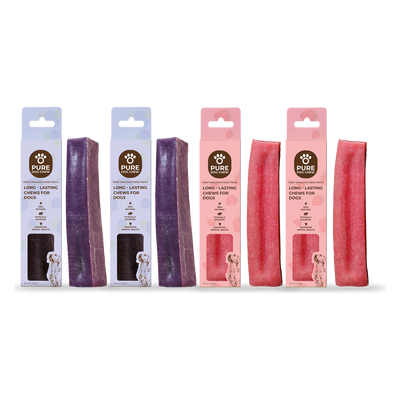
Choose a reward your dog can manage comfortably during training. A firm chew is a separate supervised activity, not a substitute for a secure door or a treatment for rushing. For more reward ideas, read our hand-target training guide and mat-settle guide.
General training information; individual dogs learn differently. Illustration generated for this article, not a product photograph.


