

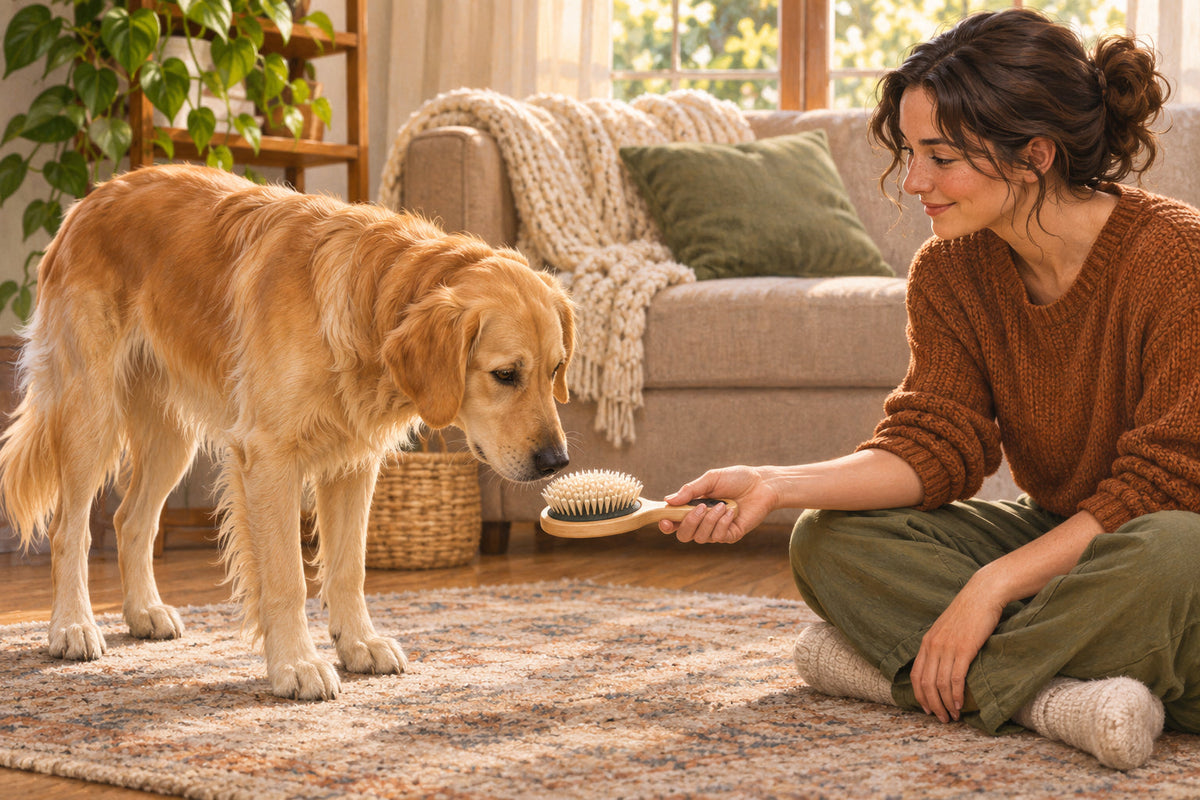
Help a dog who is unsure about coat brushing by introducing the brush slowly and rewarding comfortable participation. Begin with the brush at a distance, let your dog leave, and work toward a single gentle stroke only when they are ready. If brushing seems painful or your dog's reaction changes suddenly, contact your veterinarian.
Prepare for a short session
Choose a quiet, non-slip area where your dog can move away. Ask a groomer or veterinarian which brush suits the coat and how to use it. Have a familiar reward ready; some dogs prefer a toy or a brief game. Avoid starting with matted areas or sensitive skin.
How do I introduce the brush?
- Show it without touching. Place the brush at a comfortable distance. When your dog notices it calmly, offer a reward, then put the brush away. Let them decide whether to approach.
- Move the brush gently. Pick it up and set it down. Reward comfortable behavior. If your dog backs away, increase the distance and make the next session easier.
- Introduce brief contact. When your dog is relaxed with the nearby brush and handling, lightly touch a comfortable area with the brush, then stop and reward. Do not hold your dog still or brush an area that hurts.
- Try one gentle stroke. Brush briefly in the direction advised for the coat, reward, and pause. Gradually build to a few strokes over several sessions if your dog remains comfortable.
- Take breaks. Invite your dog back without forcing them. If they turn away, stiffen, growl or seem uneasy, stop and return to an easier step later.
Blue Cross recommends letting a worried dog get used to brushes before gradually reintroducing gentle brushing, and seeking veterinary advice if problems continue. There is no fixed timetable: let your dog's comfort guide the pace.
What can I use as a reward?
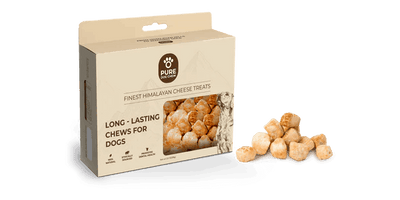
Use a familiar reward in a portion your dog can manage comfortably. Our Puffed Himalayan Yak Cheese Dog Treats are crunchy, ready-to-serve dairy treats for supervised reward time, recommended for dogs older than five months. Count treats in the daily diet, provide water and choose an appropriate portion. If your dog has a milk sensitivity, prescribed diet or food trial, ask your veterinarian before offering anything new.
What if there are mats or skin problems?
Do not tug on mats or use scissors close to the skin. A professional groomer can assess matting, and a veterinarian should assess sores, pain, swelling or a sudden reaction to being touched. If your dog growls or snaps during handling, give them space and seek veterinary and qualified behavior guidance rather than continuing.
Should I give a hard chew while brushing?
A hard chew is a separate supervised activity, not a substitute for helping your dog feel comfortable with handling. If your dog guards food or chews, avoid placing a valued item in the grooming area and ask your veterinarian or a qualified behavior professional for a plan. For another gradual handling exercise, see our harness introduction guide.
General educational information. The illustration was generated for this article and does not depict a real product.


